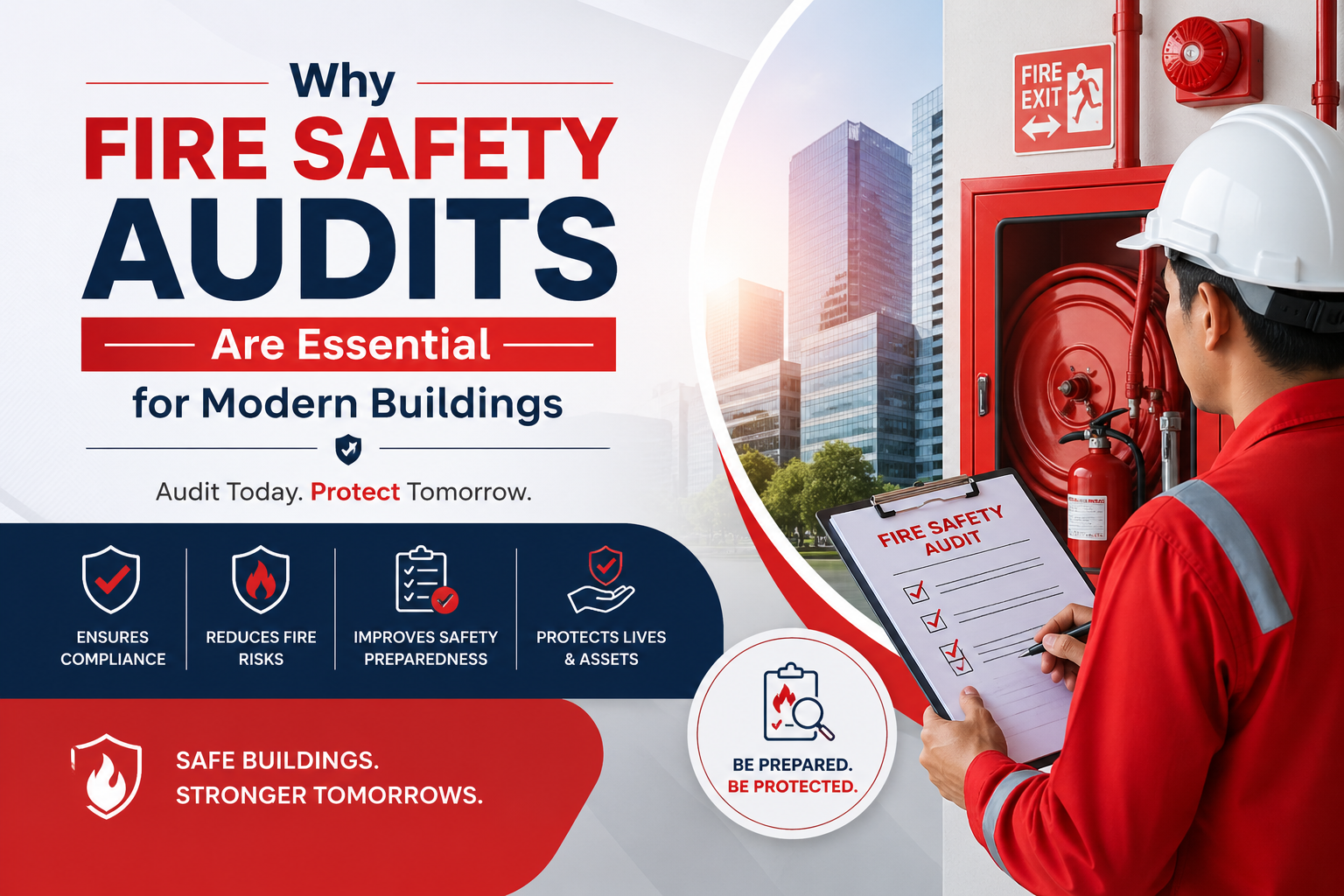
In 2026, modern buildings are smarter, taller, and more densely occupied than ever before. From high-rise offices and shopping malls to residential societies and industrial facilities, these spaces accommodate hundreds, sometimes thousands, of people daily. With this rapid urban growth and increasing complexity in infrastructure, the responsibility to ensure safety has become more critical than ever. Among the most effective ways for preparedness and reducing risk is conducting regular fire safety audits.
A fire safety audit is a comprehensive evaluation of a building’s ability to prevent, detect, and respond to fire hazards. It goes beyond simply checking whether fire equipment exists. Instead, it assesses whether systems are adequate, functional, accessible, and aligned with current safety standards. It also reviews emergency procedures, evacuation readiness and the overall coordination between people, processes, and technology.
Many buildings today are equipped with fire alarms, extinguishers, hydrants, and sprinkler systems. However, installing safety equipment is only the first step. Over time, without proper inspection and maintenance, these systems can fail when they are needed the most. In fast-paced environments, emergency exits may get blocked, signage may fade or become unclear, and evacuation plans may become outdated due to layout changes or increased occupancy. Also, ensure that the fire water tank is full all time, Hydrants, Suppression pumps and DG sets are in working conditions at all times.
This is where fire safety audits play a crucial role. They help identify hidden risks that are often overlooked during day-to-day operations. By proactively evaluating the building, audits ensure that all safety measures remain functional and effective.
Identifying these issues early can prevent minor lapses from turning into major emergencies. Regular audits also help buildings stay compliant with evolving fire safety regulations, which is especially important in 2026 as standards continue to become more stringent.
Professional fire protection services are essential in ensuring that fire safety audits are thorough and effective. These experts bring technical knowledge, industry-specific experience, and an understanding of current regulations to evaluate building safety holistically.
Instead of focusing on isolated elements, fire protection services assess the entire ecosystem of fire safety. This includes how detection systems, suppression equipment, and human response mechanisms work together during an emergency.
With the support of professional fire safety services, building managers can ensure that safety is not just a checklist but an integrated system. Experts also help train staff, conduct mock drills, and improve response coordination, making the entire building better prepared for real-life scenarios.
Conducting fire safety audits at regular intervals offers multiple advantages that go beyond compliance. These audits contribute directly to the safety, efficiency, and resilience of a building.
In addition, regular audits can help organisations build a culture of safety. When employees and residents are aware of evacuation plans and trained in emergency response, the overall effectiveness of safety systems improves significantly.
In modern buildings, fire safety cannot depend solely on the installation of equipment. True safety lies in continuous evaluation, maintenance, and preparedness. As buildings become more complex in 2026, the risks also evolve, making it essential to stay ahead through regular assessments.
A professional fire safety audit, supported by expert fire protection services and reliable fire safety services, ensures that all systems are working as intended. It transforms safety from a reactive measure into a proactive strategy.
Preparing today is the most effective way to prevent emergencies tomorrow.